
Strade Bianche: From Vintage Roots to a Modern Cycling Classic
Posted by Tony Childs on
If you’ve spent any time scrolling through cycling Instagram or watching the spring races on TV, you’ve probably seen those incredible shots of pro riders covered in a fine layer of white dust, pedalling through the rolling hills of Tuscany. It looks like something out of a vintage movie, but it’s actually one of the most exciting dates on the modern racing calendar: the Strade Bianche.
Even though it feels like it’s been around forever, sitting right up there with the legendary "Monuments" of the sport, Strade Bianche is actually a bit of a newcomer. At GC Bike Repairs, we’re big fans of any race that celebrates the grit and spirit of cycling, and honestly, nothing does it quite like the white roads of Italy.
So, grab a coffee, and let’s dive into how a vintage-themed fun ride turned into one of the most prestigious races in the world.
It All Started with a Love for the Past
Most professional races start with a bunch of sponsors and a governing body. Strade Bianche started with a bunch of guys who just really liked old bikes.
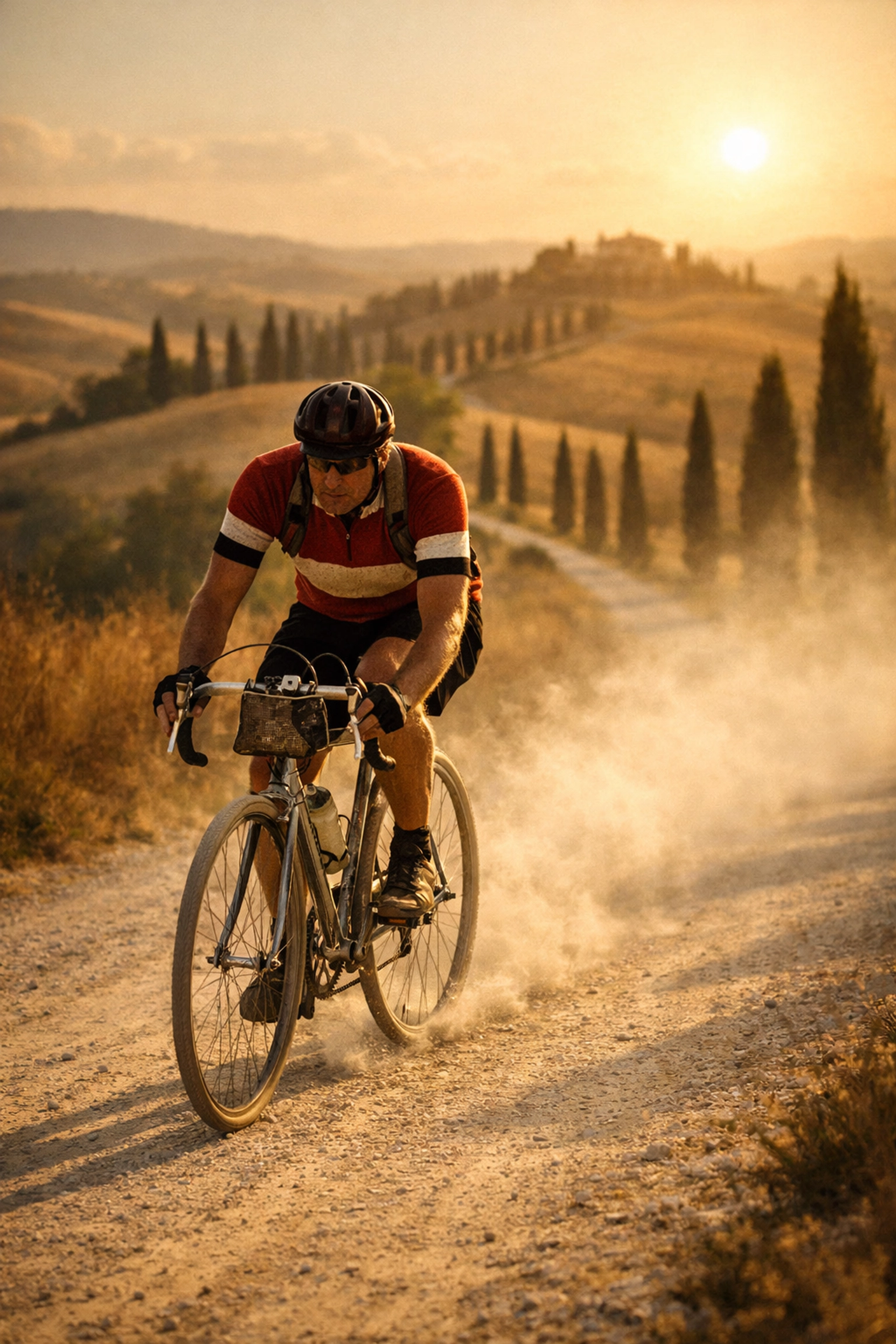
Back in 1997, a man named Giancarlo Brogi created an event called L’Eroica (The Heroic). The idea was simple but brilliant: a non-competitive ride through the Tuscan countryside, but there was a catch. You had to use "vintage" bikes. We’re talking steel frames, gear shifters on the down tube, external brake cables, and wool jerseys. No carbon fiber allowed!
The goal was to preserve the "white roads" (the Strade Bianche) of Tuscany from being paved over and to celebrate the "heroic" era of cycling from the early 20th century. People loved it. There’s something about the dust, the sweat, and the mechanical simplicity of an old bike that resonates with cyclists.
Because L’Eroica was such a hit, the organisers thought, "Why don't we see how the pros handle these roads?"
2007: The Pros Take to the Gravel
In 2007, the first professional version of the race was held. At the time, it was called the Monte Paschi Eroica. It was a relatively short race by pro standards, but it was brutal.
The pro peloton is usually used to smooth, pristine tarmac. Suddenly, they were being asked to navigate steep, loose gravel climbs on skinny road tyres. It was a chaotic, dusty, and beautiful mess. The Russian rider Alexandr Kolobnev took the first win, but it was the spectacle itself that captured everyone's imagination.
By 2008, the race was moved to early March, placing it perfectly as a "warm-up" for the big Spring Classics like the Tour of Flanders and Paris-Roubaix. But it didn't stay a warm-up for long. When legends like Fabian Cancellara started winning it (Fabian loved it so much he won it three times!), the cycling world realised this wasn't just a gimmick. It was a serious, world-class race.
What Exactly are the "White Roads"?
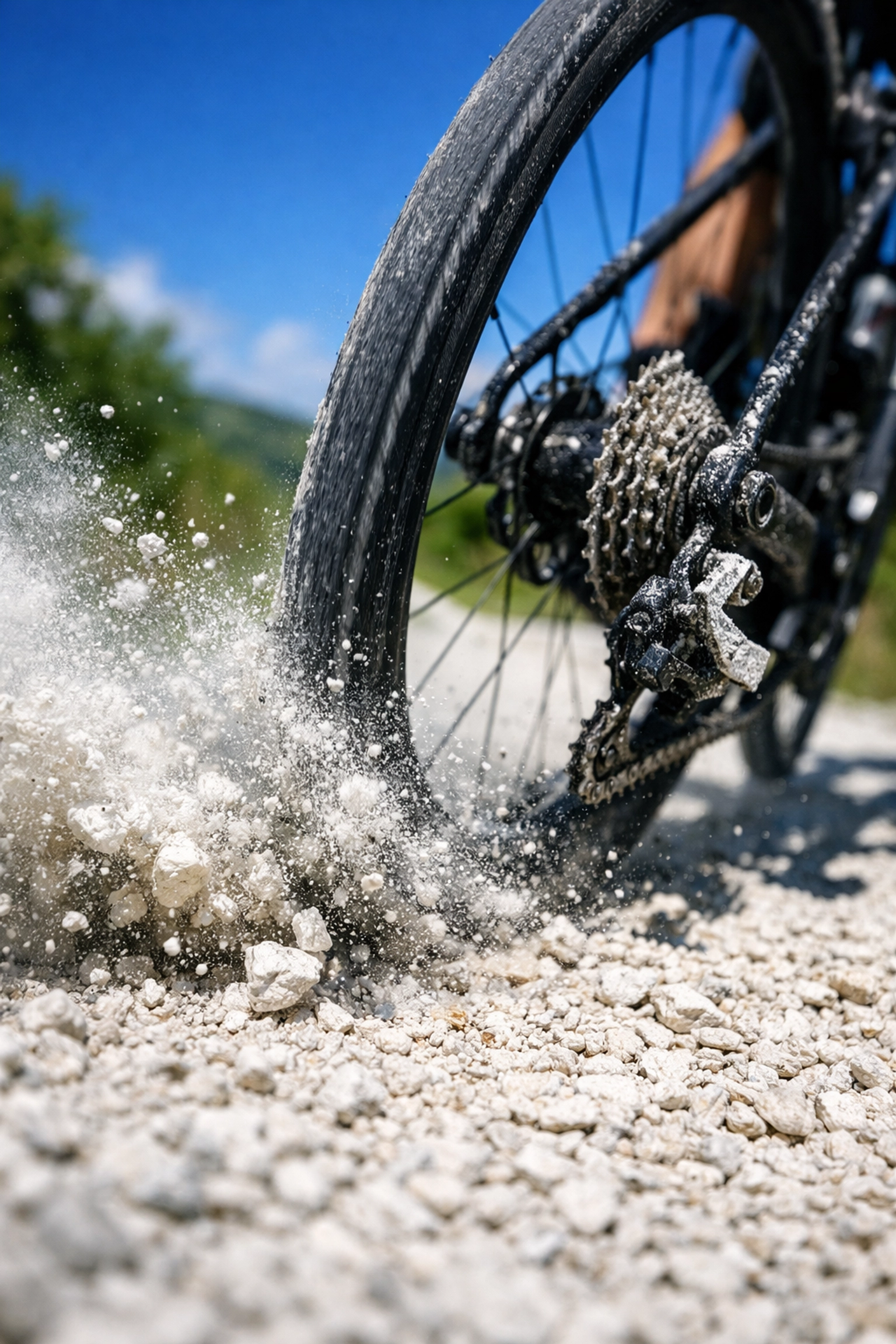
The name Strade Bianche literally translates to "White Roads." These are the historic unpaved backroads of Tuscany. They aren't quite "gravel" in the way we think of modern gravel biking, they are made of a specific type of local limestone and clay that turns a brilliant, blinding white in the sun.
When it’s dry, the riders disappear in massive clouds of white dust, looking like ghosts as they crest the hills. When it rains? Well, that’s a different story. The white dust turns into a thick, gritty paste that coats everything: the bikes, the riders' faces, and most importantly, their drivetrains. It’s a mechanic’s nightmare, but it makes for some of the most iconic photos in sports history.
Why We Call it a "Modern Classic"
In the world of cycling, the "Classics" are races that are usually over 100 years old. Races like Liege-Bastogne-Liege or Milan-San Remo have histories stretching back to the dawn of the bicycle.
Strade Bianche is only a teenager in comparison, yet it’s already being called the "Sixth Monument." Why? Because it has everything a classic needs:
- A Unique Identity: You can identify a photo of Strade Bianche instantly. Those white roads and cypress trees are unmistakable.
- Brutal Difficulty: It’s not just the gravel; the course is incredibly "punchy." There are no long mountain passes, but the short, steep hills never stop.
- Elite Winners: Look at the recent winners’ list: Tadej Pogačar, Mathieu van der Poel, Wout van Aert. These are the best riders in the world, and they all want this trophy on their mantle.
The Iconic Finish in Siena
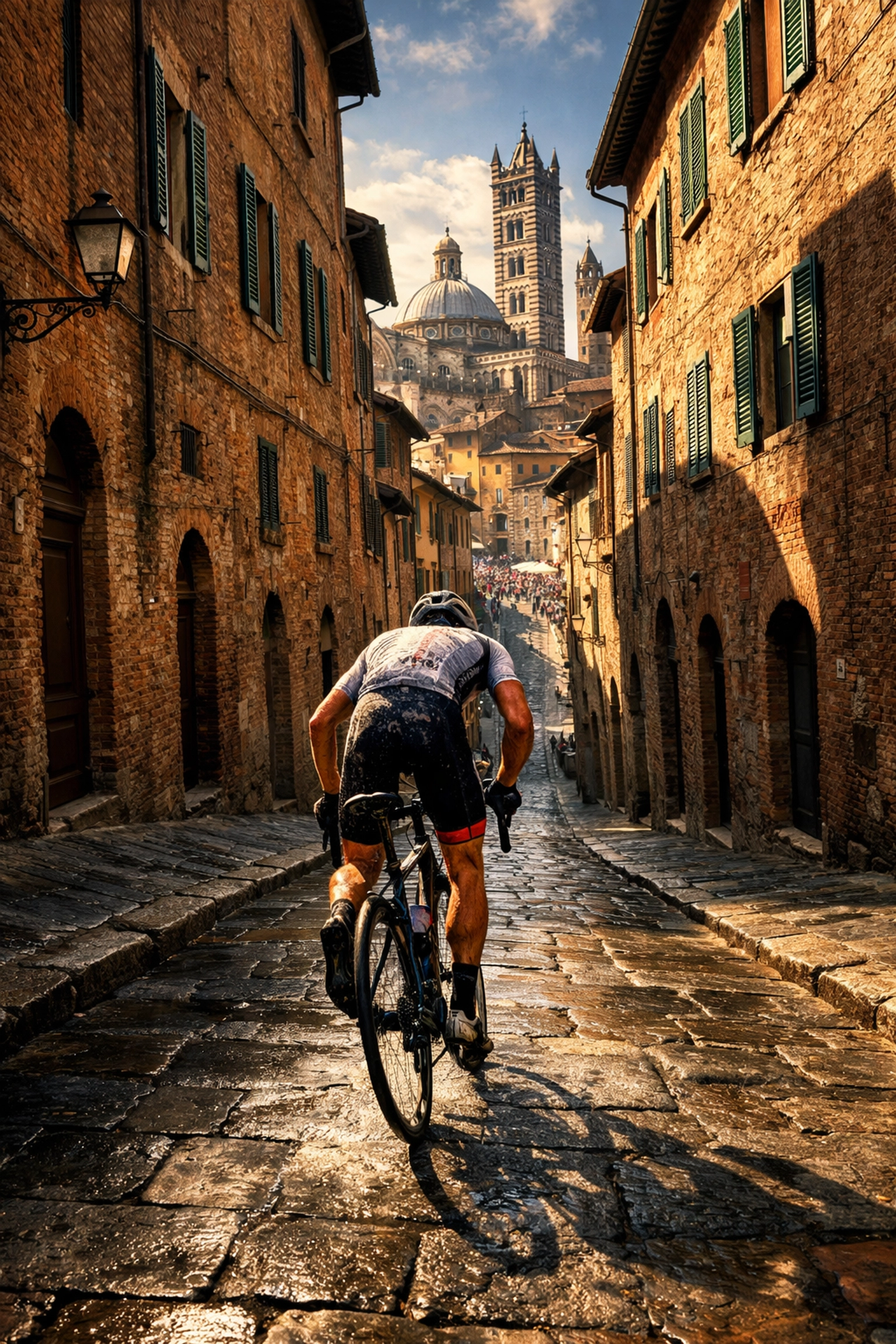
One of the reasons this race is so special is where it ends. After 180+ kilometres of pounding over gravel, the riders enter the medieval city of Siena.
The finish isn't on a wide, flat road. Instead, the riders have to tackle the Via Santa Caterina: a narrow, paved street with a gradient of 16%. It’s so steep that fans can practically reach out and touch the riders as they struggle up the climb.
Once they reach the top, they plummet down a narrow alleyway and burst out into the Piazza del Campo, one of the most beautiful town squares in the world. Watching the winner collapse onto the ancient stones of the Piazza is one of the best sights in the sport.
Getting Inspired Closer to Home
You don’t have to fly to Tuscany to enjoy the spirit of the Strade Bianche. Here in the UK, we’ve got plenty of our own "heroic" roads to explore.
For those of you riding around Portsmouth, Southsea, and Gosport, you might be surprised at how much "light gravel" is right on our doorstep. Whether you’re exploring the coastal paths around the Solent, heading up onto the South Downs for some chalky trails (our own version of the white roads!), or just taking the scenic route through the local nature reserves, there's plenty of fun to be had off the tarmac.
Gravel riding: or even just adding a bit of rougher terrain to your road ride: is a great way to improve your bike handling and see the local area from a new perspective. You don't need a vintage steel bike (unless you want one!), but you do need a bike that’s up to the task.
Is Your Bike Ready for the Dust?
The pro mechanics at Strade Bianche have their work cut out for them, and while our local trails might not be quite as punishing as the Tuscan hills, they still take a toll on your gear.
Grit and mud are the enemies of your bike’s moving parts. If you’re inspired to head out and find your own "white roads," here’s what you should keep an eye on:
- Tyre Choice: Finding that balance between speed on the road and grip on the dirt is key.
- Brakes: Grit wears down brake pads much faster than clean road riding.
- The Drivetrain: A crunchy chain is a sad chain. Regular cleaning and the right lube make a huge difference.
At GC Bike Repairs, we love a good gravel adventure. Whether you need a pre-ride safety check, a deep clean after a muddy weekend, or some advice on the best tyres for local Southsea riding, Tony and the team are here to help. We can help you prep your road bike for a bit of "sterrato" or get your gravel rig in top shape for the season.
The Strade Bianche reminds us that cycling is about more than just speed: it’s about adventure, history, and a little bit of dirt. So, get out there, find a trail, and enjoy the ride!
Want to get your bike serviced before your next adventure? Pop into GC Bike Repairs or give us a shout. We’ll make sure your ride is as smooth as silk, even when the road isn't!