
Is Your Bike Trying to Tell You Something? 10 Warning Signs You're Ignoring
Posted by Tony Childs on
Your bike can't exactly tap you on the shoulder and say, "Hey mate, something's not right." But it does communicate with you , through squeaks, wobbles, grinding noises, and that weird feeling you get when something just doesn't feel like it used to.
The problem? Most of us ignore these signs. We push through, thinking it's nothing, until suddenly we're stranded on the side of the road or facing a repair bill that makes our wallets weep.
Let's change that. Here are 10 warning signs your bike is desperately trying to tell you something , and what you should do about them.
1. The Dreaded Squeaky Brakes
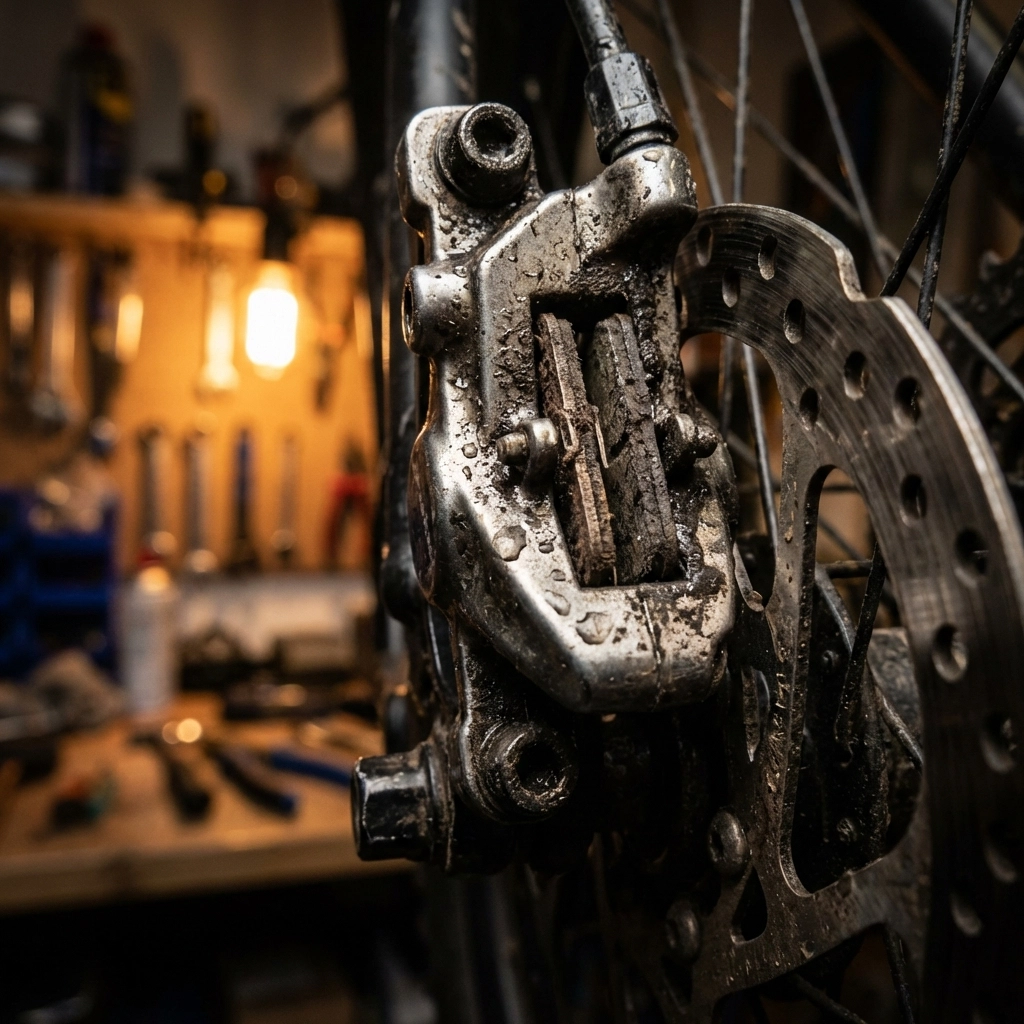
We've all heard it: that high-pitched squeal every time you pull the brake lever. It's embarrassing, sure, but more importantly, it's your bike waving a red flag.
What it means: Squeaky brakes can indicate a few things , contaminated brake pads, worn pads that need replacing, or misaligned brake callipers. In wet conditions, a bit of noise is normal, but persistent squealing? That's a problem.
What to do: Clean your rims and brake pads with isopropyl alcohol. If the noise continues, check for pad wear. If you can see the wear indicator line or the pad looks thin, it's time for new ones.
2. Gears That Won't Shift Smoothly
Remember when your gears used to click into place like a dream? Now it's more like convincing a stubborn toddler to eat their vegetables.
What it means: Sticky or hesitant shifting usually points to cable stretch, a dirty drivetrain, or a derailleur that's out of alignment. Over time, gear cables naturally stretch, throwing off your indexing.
What to do: Start by cleaning and lubricating your chain and cassette. If that doesn't help, your cables likely need adjusting. Look for the barrel adjuster on your derailleur , small turns can make a big difference.
3. Chain Skipping Under Pressure
You're pedalling hard up a hill, and suddenly your chain jumps or skips. It's jarring, potentially dangerous, and definitely annoying.
What it means: A skipping chain often indicates a worn chain, worn cassette, or both. Chains stretch over time (yes, really), and when they do, they wear down your cassette teeth unevenly.
What to do: Get your chain checked with a chain wear tool. If it's stretched beyond 0.75%, replace it promptly. Wait too long, and you'll need a new cassette too : which is significantly more expensive.
4. Wobbly Wheels
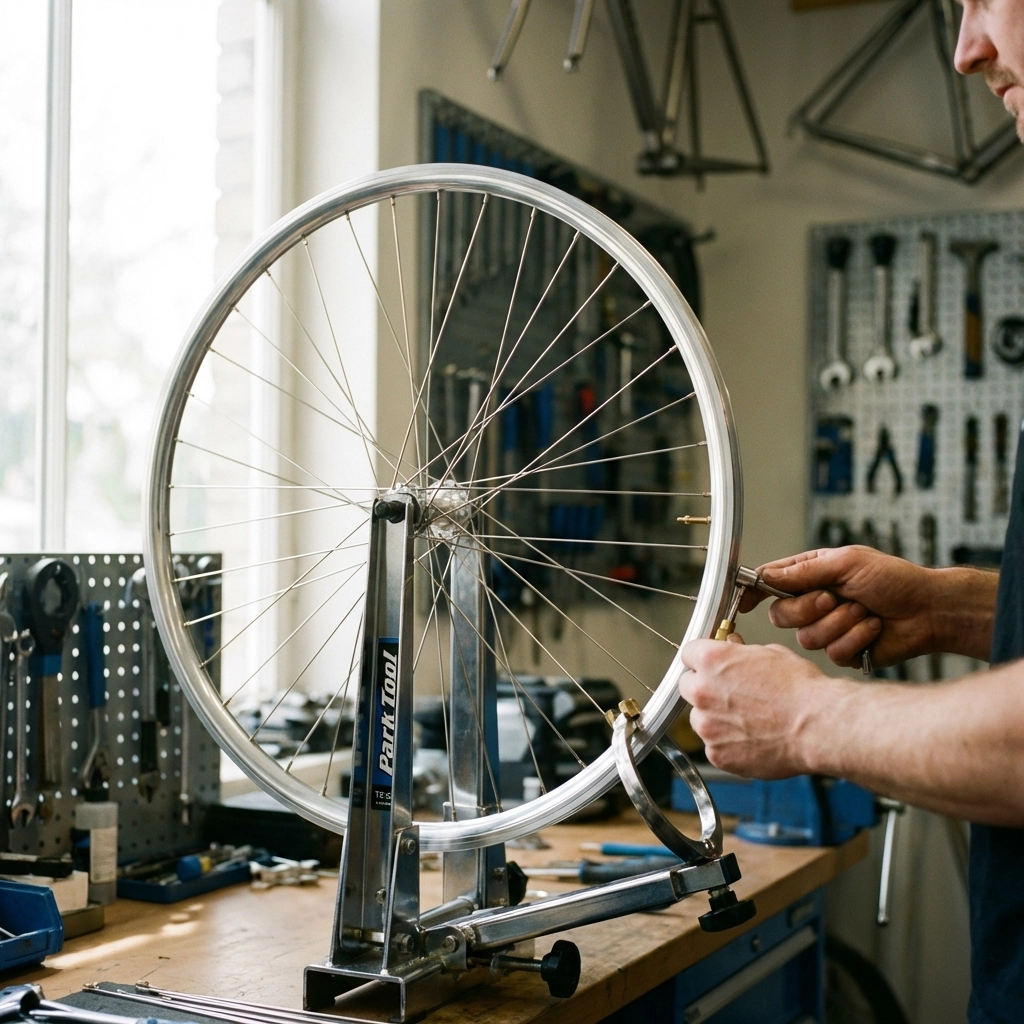
If your wheel looks like it's doing a little dance while spinning, that's not a feature : it's a problem.
What it means: A wobbly wheel indicates the wheel is out of true. This happens from normal riding, hitting potholes, or the occasional kerb encounter. It can also mean loose spokes.
What to do: Flip your bike upside down and spin each wheel slowly. Watch the gap between the brake pads and rim. If it varies significantly, your wheel needs truing. This is one job best left to professionals unless you have the tools and know-how.
5. Mysterious Creaking from the Bottom Bracket
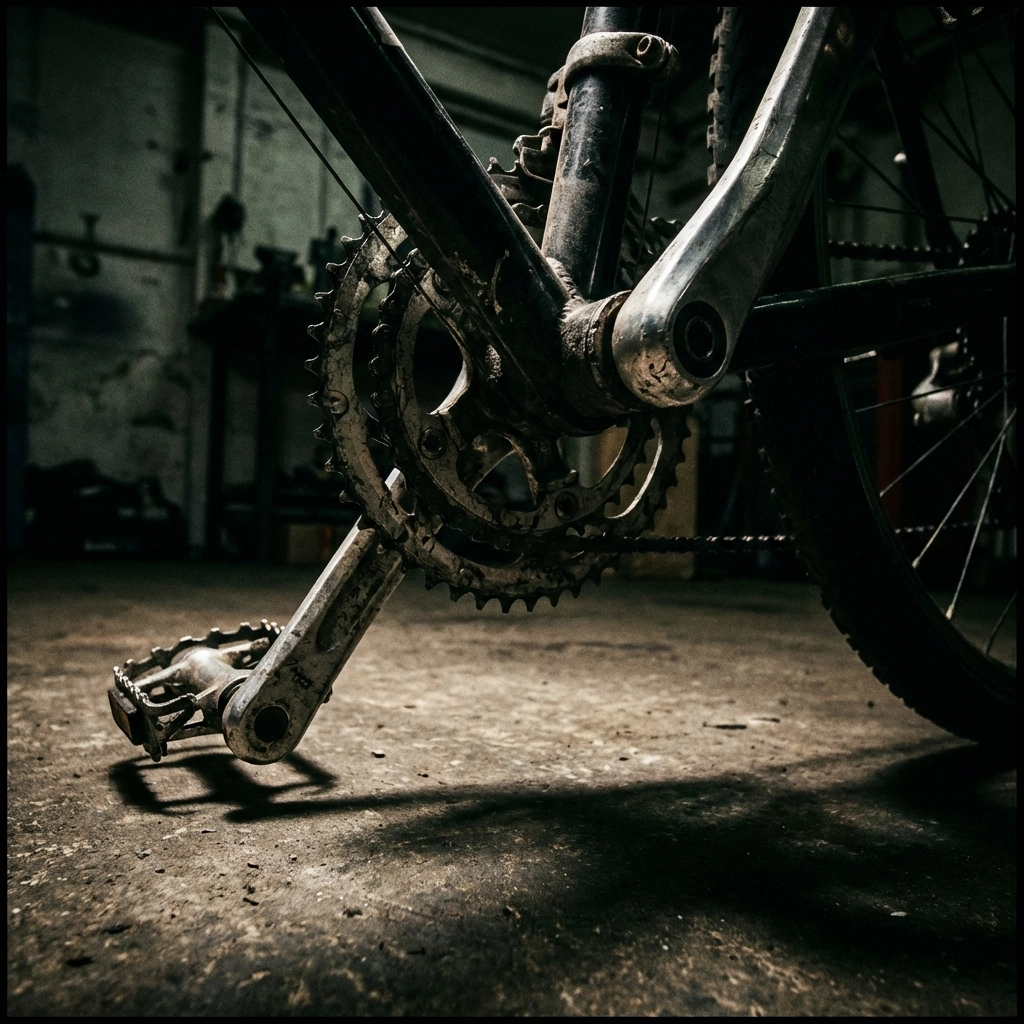
There's a creak coming from somewhere around your pedals or the middle of your bike, and it's driving you absolutely mental. Welcome to the bottom bracket mystery.
What it means: Creaking in this area could be your bottom bracket bearings wearing out, loose crank bolts, or even your pedals. The frustrating part? Sounds travel through bike frames, so pinpointing the source isn't always straightforward.
What to do: Start simple : check your pedals are tight and your crank bolts are torqued correctly. If the creaking persists, it's likely bottom bracket related. These bearings take a beating and typically need servicing or replacing every few years.
6. Tyres That Won't Hold Air
You pumped them up yesterday. Today they're soft again. What gives?
What it means: If your tyres are losing air faster than they should, you've likely got a slow puncture. This could be from a tiny thorn, a small piece of glass, or a pinhole in your inner tube. Sometimes the valve itself is the culprit.
What to do: Inflate the tube and submerge it in water (or run it past your ear) to find the leak. Small punctures are easily patched, but if your tube looks like Swiss cheese from multiple repairs, invest in a new one.
7. Loose or Wobbly Handlebars
If your handlebars move when they shouldn't, stop riding immediately. This is a safety issue.
What it means: Loose handlebars indicate that either your stem bolts or your headset needs attention. Both are critical components that keep you in control of your bike.
What to do: Check that your stem bolts are properly tightened (use a torque wrench if you have one). If the whole headset feels loose when you rock the bike back and forth with the front brake engaged, it needs adjusting.
8. Brakes That Feel Spongy or Weak
You pull the lever, and instead of confident stopping power, you get... mush.
What it means: For rim brakes, this usually means worn pads or stretched cables. For hydraulic disc brakes, spongy feel typically indicates air in the system or low brake fluid.
What to do: Rim brake users should check pad wear and cable tension. Hydraulic brake users may need a bleed : a process that removes air bubbles from the brake lines. This restores that sharp, responsive feel.
9. Rust Spots Appearing
A few spots of rust might seem purely cosmetic, but they're actually telling you something important about your bike's condition and storage.
What it means: Rust indicates moisture exposure. Surface rust on the frame is mainly aesthetic, but rust on your chain, cables, or bolts can seriously affect performance and safety.
What to do: Address rust early. Clean affected areas and apply appropriate lubricant or rust inhibitor. More importantly, look at where you're storing your bike. A damp shed or leaving it outside will accelerate rust formation.
10. Clicking or Clunking from the Pedals
Every rotation brings a click. It's rhythmic, persistent, and maddening.
What it means: Clicking from your pedals usually indicates worn pedal bearings, loose cleats (if you use clipless pedals), or sometimes loose crank arms. Occasionally, it's actually coming from elsewhere but sounds like the pedals.
What to do: First, make sure your pedals are tight. Check your cleats for wear and ensure they're secure. If you've ruled those out, the pedal bearings might need servicing or the pedals might need replacing altogether.
Don't Wait Until It's Too Late
Here's the thing about bike problems: they rarely fix themselves, and they almost always get worse (and more expensive) if ignored.
That strange noise you've been living with for months? It could be a simple £20 fix today or a £200 nightmare next month. Your bike is literally trying to help you avoid that scenario.
Our advice: Listen to your bike. When something feels or sounds different, investigate it. Some issues you can sort yourself with basic tools and a bit of patience. Others need professional attention : and there's no shame in that.
At GC Bike Repairs, we see bikes every day that could have been easy fixes if caught earlier. Whether it's a quick adjustment or a full service, getting your bike checked regularly keeps you safe, saves you money, and keeps you riding.
Not sure what your bike is trying to tell you? Pop into one of our shops for a free assessment. We'll translate those squeaks and creaks into plain English and get you back on the road safely.
Visit us at www.gcbikerepairs.com to book a service or find your nearest shop.
If you have any of these issues and want to book your bike in click the link https://gcbikerepairs.com/pages/book