
Race Season is Coming: Is Your Bike Actually Ready for the Challenge?
Posted by Tony Childs on
There's something magical about those first warm days of spring. The clocks go forward, the evenings get lighter, and suddenly that familiar itch returns: the urge to dust off your race bike and hit the road with some proper intent.
Whether you're eyeing up a local crit, a sportive, or your first triathlon of the season, the excitement is real. But here's the thing: your bike has been sitting through months of cold, damp weather. Maybe it's been on the turbo. Maybe it's been hanging in the garage collecting dust. Either way, it's probably not as race-ready as you think.
Before you pin on that number and line up at the start, let's talk about what your bike actually needs to perform when it matters most. Because nothing ruins a spring race quite like a mechanical you could have prevented.
The Harsh Truth About Winter Bikes
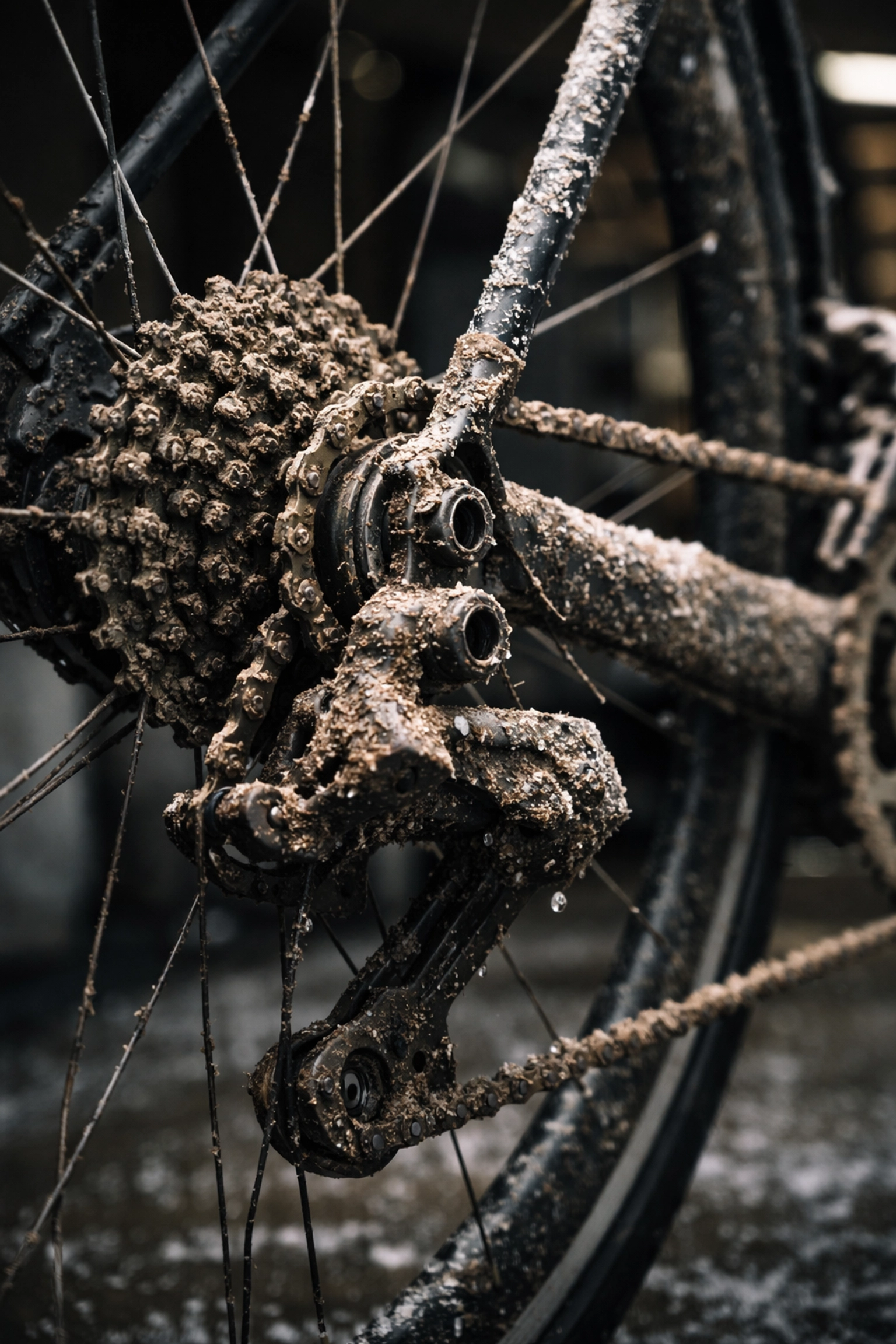
Let's be honest: winter is brutal on bikes. Even if you've been riding through the colder months, the combination of road salt, grit, rain, and general grimness takes its toll. Components wear faster. Cables stretch. Brake pads deteriorate. And if your bike has been sitting unused? Things seize up, rubber perishes, and that chain you meant to replace in November is now well past its best.
The problem is, a lot of this wear happens gradually. You don't notice your brakes getting weaker or your gears getting sluggish because it happens bit by bit. Then race day arrives, you're pushing hard, and suddenly that worn chain snaps or your brakes fail to stop you in the bunch. Not ideal.
The Big Three: What You Actually Need to Check
You don't need to be a mechanic to spot the warning signs. Here are the three areas that cause the most race-day headaches: and how to know if yours need attention.
1. Tyres: Your Only Contact with the Road
Your tyres are literally where the rubber meets the road, so they deserve serious attention before any race.
What to look for:
- Wear indicators: Most quality tyres have small wear indicator holes or lines. If these have disappeared, your tyre is done.
- Cuts and cracks: Run your fingers over the tyre surface. Feel for embedded glass, flints, or thorns. Check the sidewalls for cracking: a sign of age and UV damage.
- Pressure: Tyres lose air over time, especially if your bike has been sitting. Check your pressure is appropriate for your weight and the race conditions.
Old tyres don't just puncture more easily: they also grip less in corners and roll slower. If your tyres have done a season or more of hard miles, fresh rubber could be the easiest speed upgrade you'll make all year.
2. Chain Wear: The Silent Performance Killer
A worn chain is sneaky. It still works, sort of. But it's slowly destroying your cassette and chainrings while robbing you of power with every pedal stroke.
What to look for:
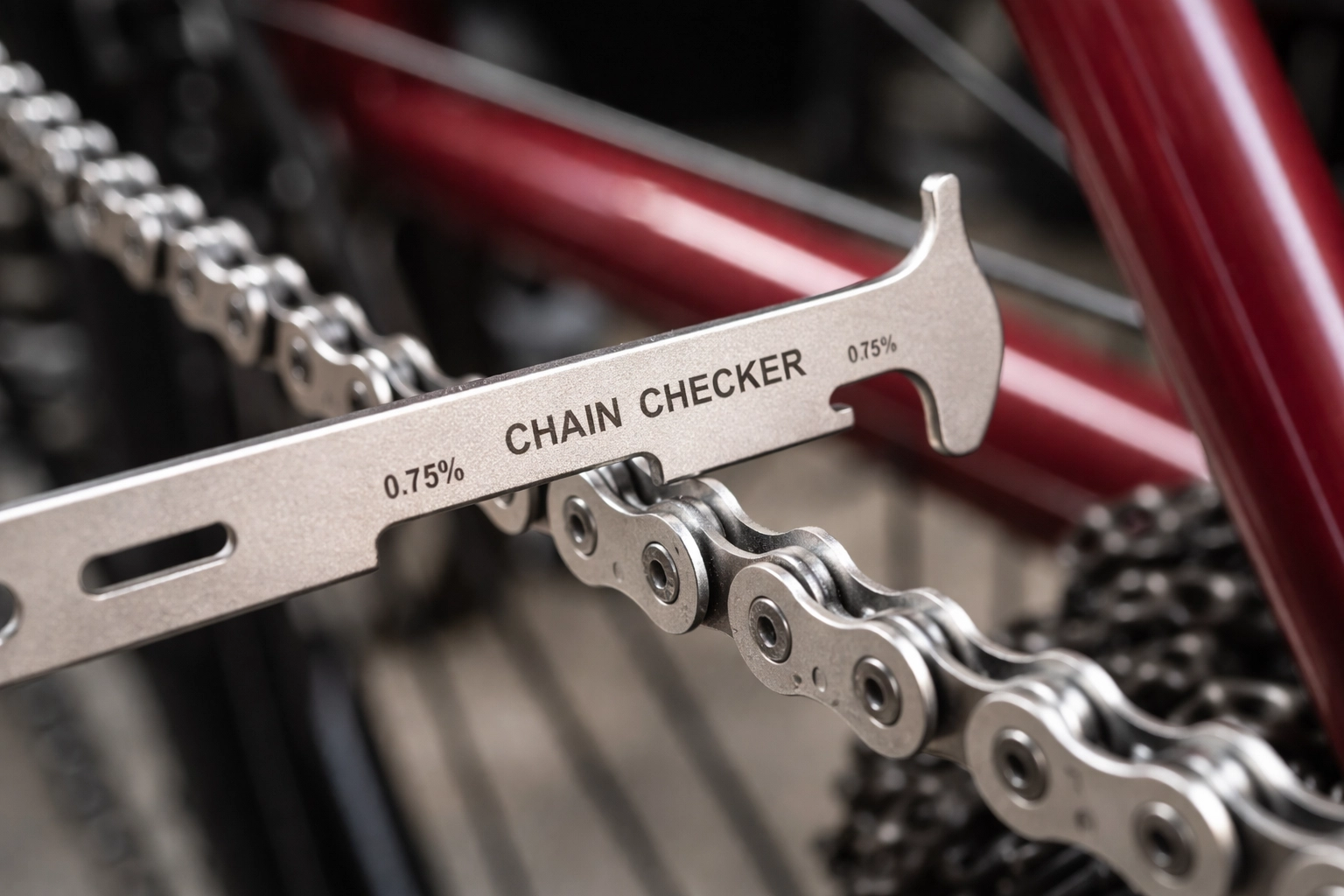
- Chain stretch: Chains don't actually stretch: the pins and rollers wear down, creating slack. A chain checker tool (or your local bike shop) can measure this in seconds.
- Skipping gears: If your chain jumps or skips under hard pedalling, that's a worn chain and possibly a worn cassette too.
- Rust or stiff links: A chain that's been neglected through winter might have stiff links or surface rust, both of which hurt your efficiency.
Here's the painful truth: replace a chain early, and it's a cheap fix. Leave it too long, and you're looking at a new cassette and potentially new chainrings too. That's a much bigger bill.
3. Brake Responsiveness: Because Stopping Matters
Racing isn't just about going fast: it's about being able to slow down when you need to. Whether you're on rim brakes or discs, your brakes need to be sharp and predictable.
What to look for:
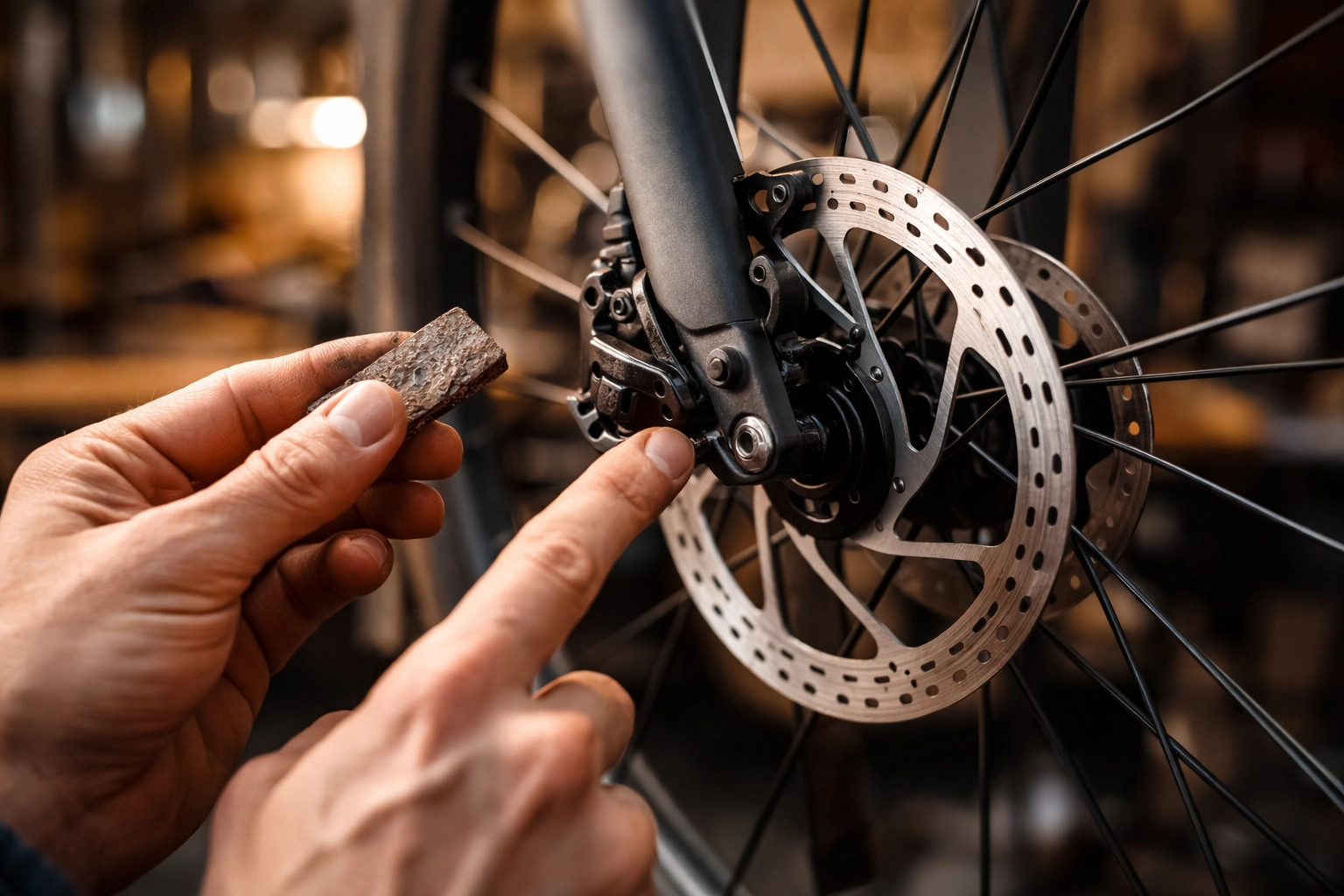
- Pad wear: Brake pads have wear indicators. If you're down to the metal or the grooves have disappeared, it's time for new pads.
- Lever feel: Your brake levers should feel firm and responsive, not spongy or pulling all the way to the bars.
- Rotor condition (disc brakes): Check for warping, contamination, or excessive wear on your rotors. Contaminated pads and rotors can cause squealing and reduced stopping power.
- Cable condition (rim brakes): Frayed or corroded cables won't give you the stopping power you need when you're descending at 50mph in a bunch.
In a race situation, you need to trust your brakes completely. There's no room for doubt when you're braking late into a corner or reacting to a crash ahead of you.
Beyond the Big Three: Don't Forget These
While tyres, chain, and brakes are the headline acts, there are a few supporting players that deserve a quick check:
- Bolts and fasteners: Give everything a once-over. Stem bolts, seatpost clamp, bottle cage bolts: things work loose over time, and you don't want your handlebars shifting mid-sprint.
- Gear indexing: Do your gears shift smoothly through the full range? Hesitation or noise means your cables might need adjusting or replacing.
- Wheels: Spin them and check for wobbles. A wheel that's out of true creates unnecessary drag and can affect braking.
- Headset and bottom bracket: Any creaking, clicking, or play? These bearings take a hammering and often get overlooked.
DIY vs Professional Service: Let's Be Real
Look, we get it. You're handy with a multi-tool. You've watched the YouTube videos. You reckon you can sort most of this yourself.
And honestly? For basic checks and maintenance, that's totally fine. Keeping your chain lubed, checking your tyre pressure, giving your bike a clean: these are all things you should be doing regularly anyway.
But here's where it gets tricky: when race day is approaching and you actually need your bike to perform flawlessly, a last-minute DIY fix can cause more problems than it solves.
Common DIY disasters we see:
- Over-tightened bolts that strip threads or crack carbon
- Brake cables that aren't seated properly, leading to weak braking
- Chains installed with the quick link facing the wrong way
- Gear indexing that's "close enough" but skips under race load
- Bottom brackets that weren't greased and now creak like a haunted house
The reality is, a professional mechanic has the tools, the experience, and the trained eye to spot issues you might miss. We see hundreds of bikes every month, so we know exactly what to look for: and what's likely to cause problems down the road.
Why a Pre-Race Service Makes Sense
Think of it like this: you wouldn't run a marathon in shoes you hadn't worn for six months without checking them first. Your race bike deserves the same consideration.
A proper pre-race service at GC Bike Repairs covers all the bases:
- Full safety check of all components
- Drivetrain assessment and cleaning
- Brake inspection and adjustment
- Gear indexing and cable check
- Wheel true and hub check
- Torque check on all critical bolts
And here's the thing we're most proud of: we don't do jargon. When you pick up your bike, we'll explain exactly what we did and why: in plain English. No patronising, no unnecessary upselling, just honest advice about what your bike needs to get you across that finish line.
Don't Risk a DNF
There's nothing worse than training all winter, putting in the miles, dialling in your nutrition: and then having your race ruined by a mechanical that could have been prevented.
A DNF (Did Not Finish) because of a snapped chain, failing brakes, or a seized bottom bracket isn't just frustrating: it's avoidable.
We're based in Portsmouth and serve riders across Southsea, Gosport, and the surrounding areas. Whether you're a seasoned racer or lining up for your first event, we'll make sure your bike is ready to perform when it matters.
Book Your Pre-Race Service
Spring race season waits for no one, and our workshop gets busy as the weather improves. If you've got an event coming up, don't leave it until the last minute.
Book your service online now and let's get your bike race-ready. We'll have you rolling smooth, shifting crisp, and stopping sharp: so you can focus on what really matters: smashing your goals this season.
See you at the start line! 🚴♂️